
The process of Setting up cloud infrastructure was slow and grueling, taking 4-6 months of back-and-forth between siloed teams.
“I’ve had more than one employee quit over this process” one interviewee told me.
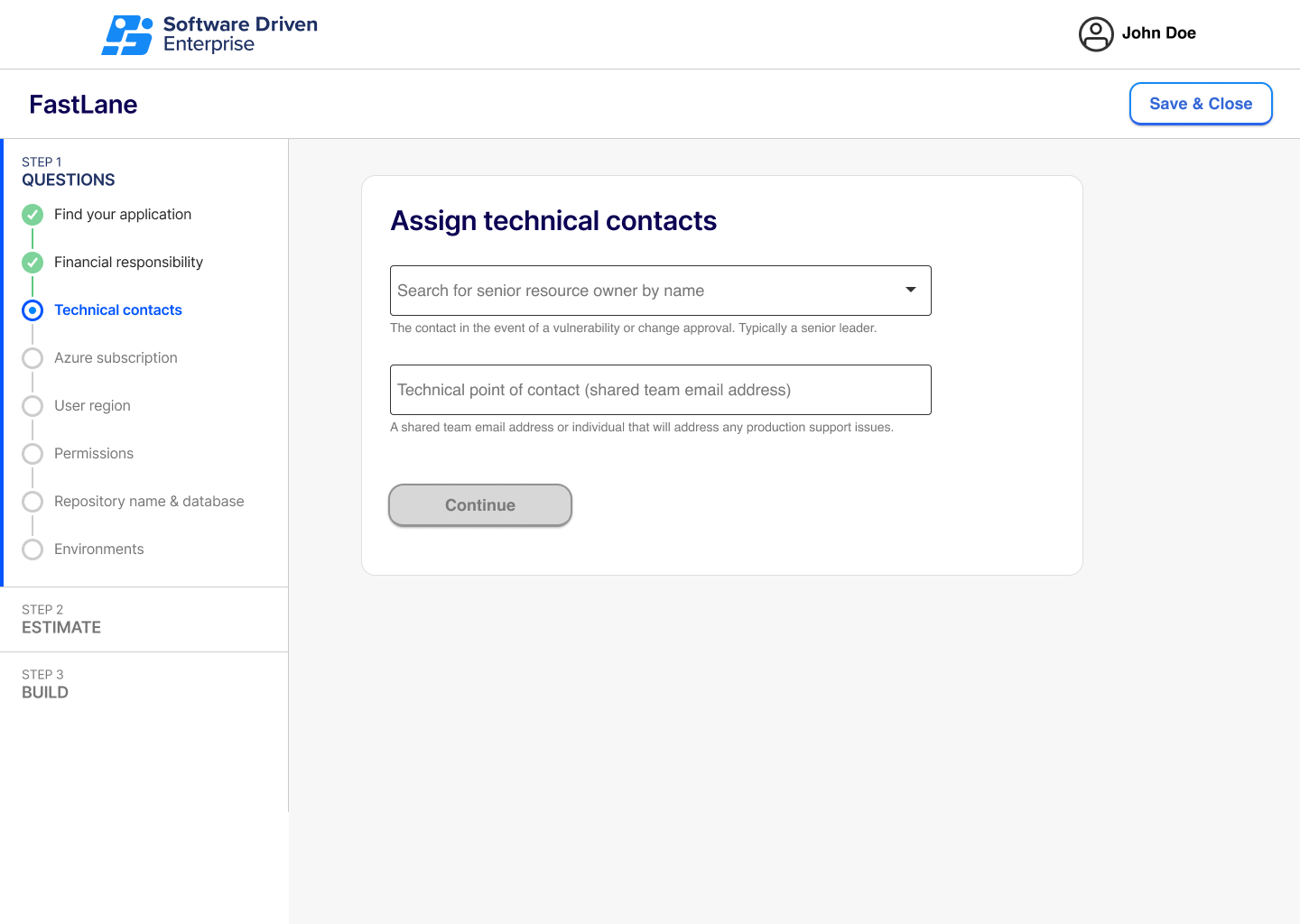
The Challenge
I won’t lie to you. Hearing that it takes on average, 6 months, for the organization to request and then spin up a cloud environment was jarring.
Understanding the current reality of why it was taking 5-6 months to deploy AKS infrastructure involved the most ambitious discovery effort I have ever been involved with, but our team was up to the task.
To begin we needed to understand all the players involved in this process. Dividing into five teams - Security, Finance, Express Cloud (AKS infrastructure), Database, and Firewall - we paired with these silos, embarking on the journey to uncover the pain points and inefficiencies plaguing the existing process.
For me specifically? I was tasked with understanding all things database provisioning related.
CVs Health
PROJECT NAME: SDE Fastlane
DELIVERABLES: Solution architecture for back-end automation, product MVP
MY ROLE: Lead designer (database provisioning discovery), product designer (MVP), workshop facilitator, copywriter
CHALLENGE: Unite siloed departments, eliminate red tape procedures and introduce automations to rapidly accelerate AKS cloud infrastructure delivery from 6 months to <1 week
SOLUTION: A one-stop portal orchestrating approvals and infrastructure creation across multiple silos, eliminating dozens of meetings, emails, and forms
BUSINESS VALUE: Savings in the millions by re-evaluating and redesigning the existing process required to deploy a new cloud environment
USER VALUE: The process of requesting and deploying cloud environments can go from being a long, arduous process costing time and resources, to a simple streamlined experience taking less then a week.
WHAT I LEARNED: Learning to work with your cross functional partners can be the difference maker when having to unravel such complex flows. These relationships can go a long way and the users will thank you for it!
THE REsults:
-85% reduction in time to deploy AKS
-annual savings exceeding $29.18M (year 1)
-6 month Process → 1 week

The Discovery
I was initially assigned as the lead designer for the database effort. Database provisioning was one of the steps in the larger ASK build so it was our goal to not only understand what this team does, but also how it fits in with the larger process (the other 4 teams mentioned earlier).
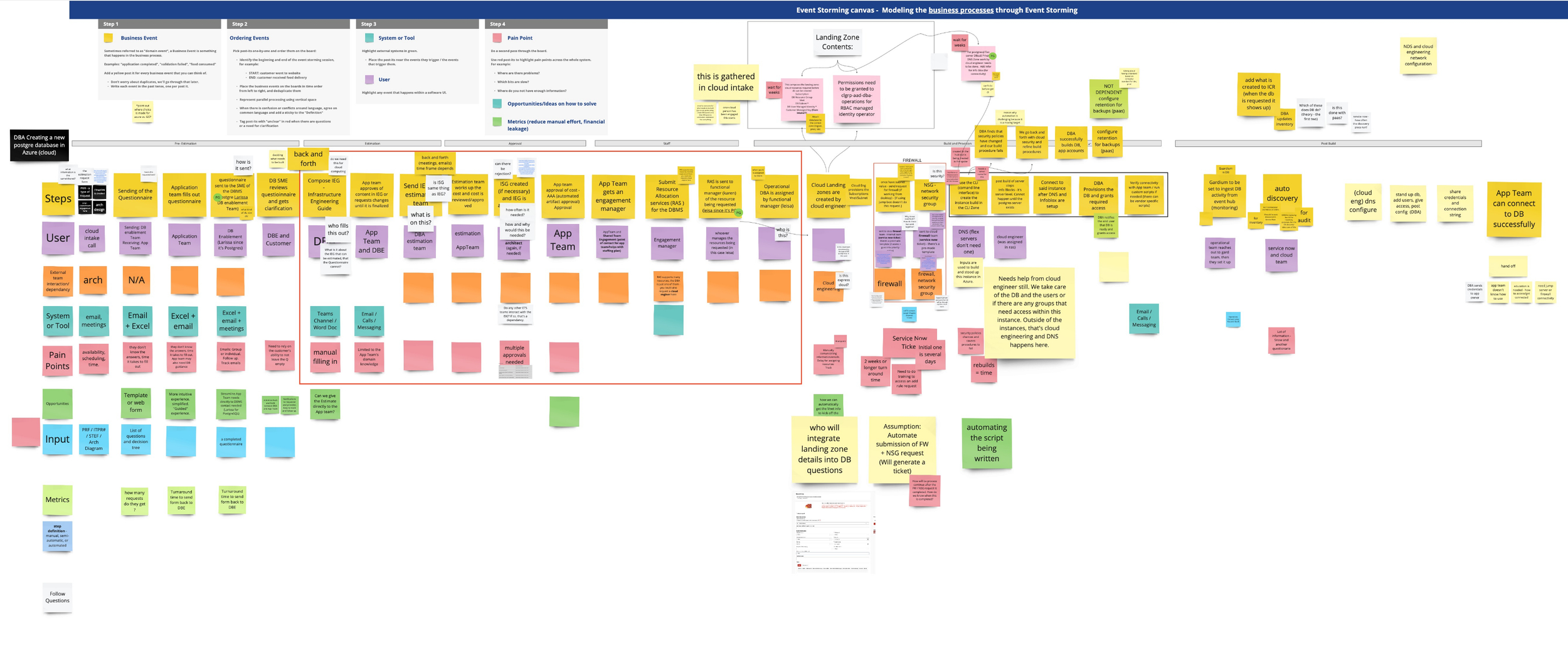
Collaborating with a product manager and 4 database engineers, we embarked on an intensive discovery effort starting what we refer to as an “Event Storm”. The process is relatively straight forward - we gather our users together, give them all an opportunity to individually map out their workflows, then we all come back together with our maps and combine them into a single source of truth. From that map, we identify each of the steps in the process, the tools used, any pain points they encounter and any opportunities.
The process, when it’s first completed, can be a a little messy but after some validation with users, a few more questions answered via interviews (1 hour) and a little bit of TLC, we have our full current user journey for our database provisioning!
The bigger picture
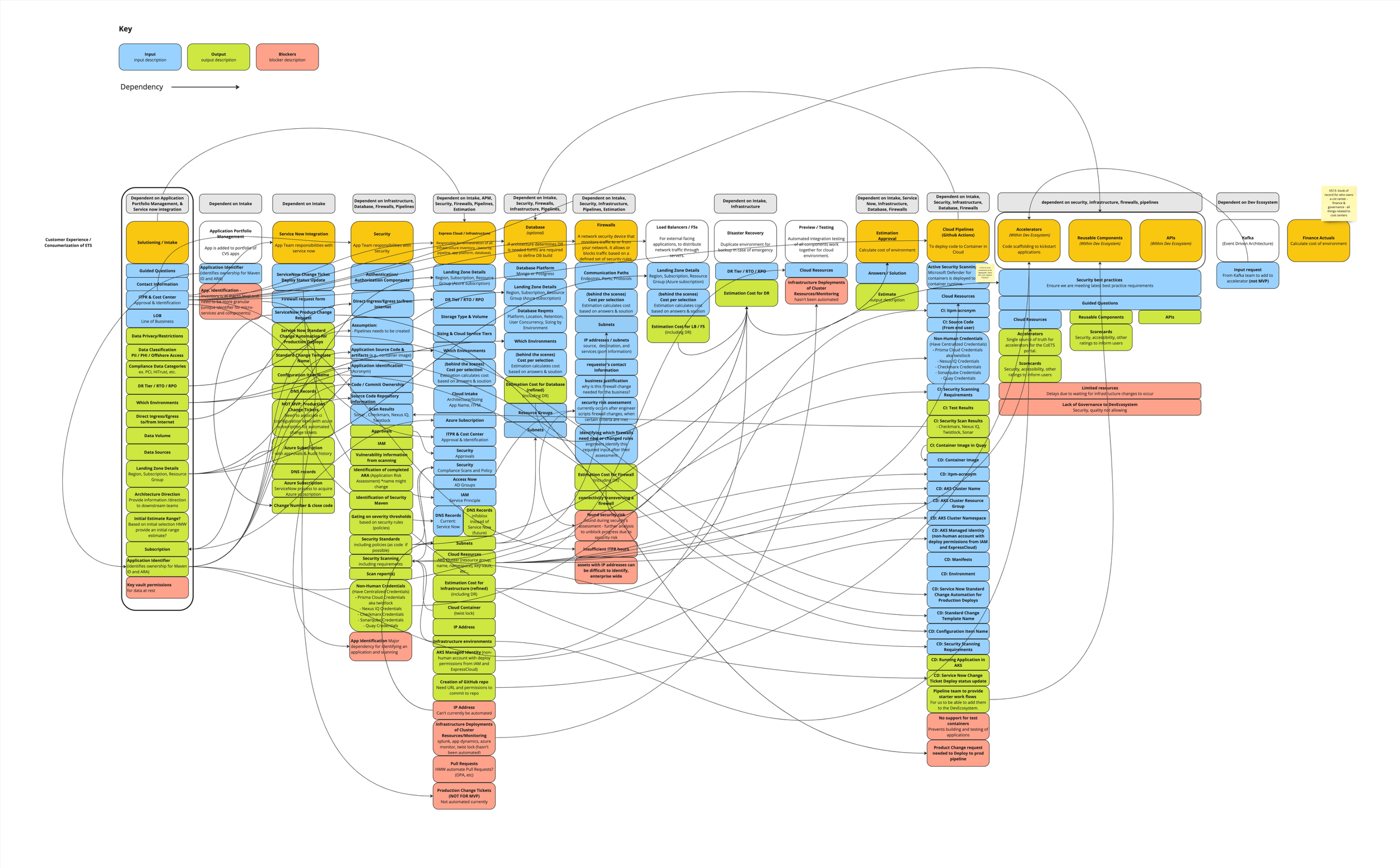
Our next big task was starting to meet bring our findings back to the other teams working on their own discoveries.
What we found was, well, also kind of messy. ¯\_(ツ)_/¯
We fully expected there to be a number of dependancies across the various teams and it was exactly that. It was now our job to untangle with web by meeting with one another. This was accomplished in a week long Design Sprint. For 5 days, each team was able to boil down exactly what they needed (bare bones minimum) to complete their task.
From there, we were able to not only frame the solution to automate this large scale process, but also define our MVP.
The Solution
Recognizing the inefficiencies associated with the traditional approval process, an input form full of confusing and unnecessary questions and the time-consuming nature of large meetings, we proposed a streamlined template solution.
With only a few questions needed, and an agreement from business stakeholders, we proposed offering the requesting user a set of pre-approved database templates which allowed the team to bypass the traditional approval and estimation processes, and rely on automation to complete the build. No new development would be required and automation could provision the build as soon as all other automation scripts were completed!
The result has been a more agile and efficient workflow, allowing our users to focus on more technical and complicated asks, instead of dealing with the hindrance of bureaucratic procedures for basic requests.

The MVP
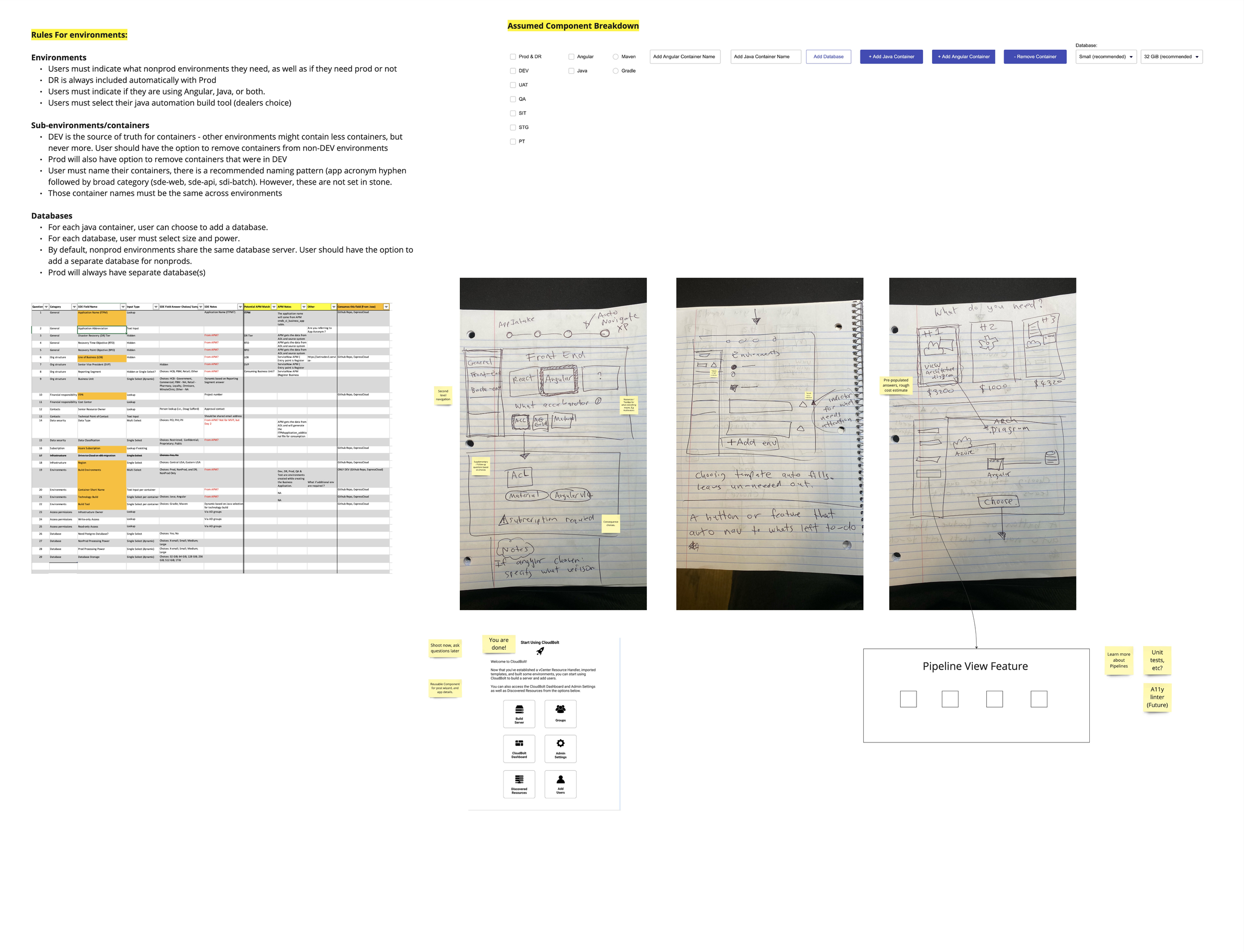
Knowing that the solution needed to be lean, the individual teams boiled down what data they needed to know and turns out - we could get all of it from a short and sweet request form! So each team submitted the questions and it was then on to building out the structure of the form, while our engineers got to work on automating the backend process.
A co-design session was held along side users of the soon to be system to bring the vision to life!
The Impact
SDE FastLane reduced the timeline it takes to deploy AKS infrastructure by 99%, and reduces the amount of effort on the part of the users by 80-95%.
Cost-savings projections:
Year 1 - $29.18M
Year 2 - $34.48M
Year 3 - $40.31M
the Key Takeaways
The entire database provisioning process (initial request to hand off), can take up to 20 weeks.
The actual process to provision a database, only takes a few minutes.
The rest of the process is held up due to cumbersome intake forms, estimation meetings, approvals, staffing, other engineering teams and firewall requirements.
Database engineers need to understand only a few key pieces of the initial request and have a “cloud landing zone” in place in order to actually build. Everything else is a matter of funding, documentation and approvals.